31
May
You might also like. They are still very.

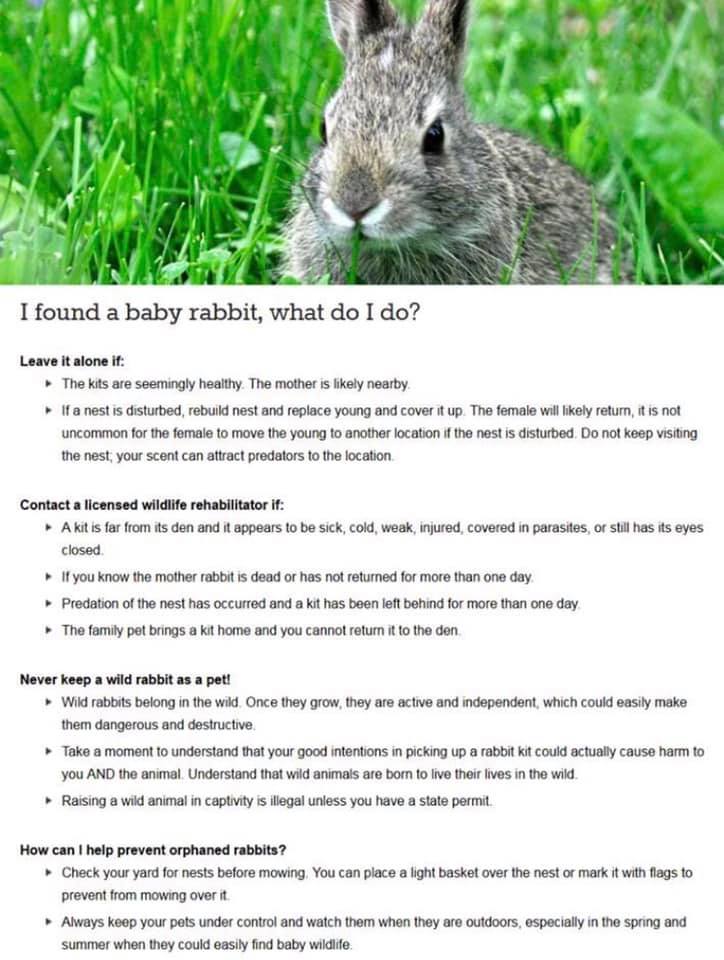
How to care for a injured wild bunny. If it is a wild rabbit injured contact a wildlife rehabber immediately Google your state and wildlife rehabbers Call your local Humane Society who may have a Wildlife. To care for your injured rabbit flush small wounds with warm water and antiseptic soap. If your rabbit is still bleeding apply pressure with a sterile gauze pad or clean cloth and if your rabbit has a burn flush the affected area with cool running water.
As you care for your rabbit. If you have an injured wild rabbit please take him to a wildlife rehabailitator as they have the specialized knowledge and equipment to save his life. With rabbits time is of the essence as wild bunnies will get stressed and die very easily and rehabilitators have the means to treat them fully.
Follow these steps to help your orphaned rabbit urinate and defecate. With sanitized hands wet a cotton ball with lukewarm water. Pop the bunny on its back keeping it secure and gently rub its genital area and abdomen.
After a little while the. Clean up any urine or. In your case you can try to give some water if itll drink it and maybe dark green veggies.
I would contact a local wildlife rehabber in addition to the vet. The rehabber will take care of the injured rabbit if possible. Check out the following link for some resources on how to find a local rehabber.
To care for a wild baby rabbit line a wooden or plastic box with pesticide-free soil and dried hay then scoop out a circular nest in the hay and nestle the bunny into it. Remember to handle the baby as little as possible since excessive handling can cause distress and even death. Walk over to the rabbit and check for any obvious signs of injury.
This includes blood broken bones and intense squirming. If the rabbit is injured immediately call the local vet or humane society. Unless you are a professional any attempts to care for the wounded rabbit are futile.
The rabbit is uninjured. I know what youre thinking. If you need to handle an injured animal Only lift a wild animal if youre sure that you can do so without risk to yourself or others.
Make sure you also keep the animal away from your face. Wear gloves when handling all wild animals especially oiled wildlife - pollutants like oil can be hazardous. Leftover herbs strawberry or carrot tops or the trimmed ends of many different fruits and vegetables are safe for wild rabbits to eat.
Instead of tossing these leftovers in the garbage you put them outside for the rabbits. But try not to make this a daily habit. Depending on the severity of injury a vet may administer an antibiotic topically andor orally and may put in stitches if the wound is large or deep.
You might also like. A review of more than 49 rabbit. It may be tempting to help a wild animal that appears to be injured.
But the Arizona Game and Fish Department has this advice. Recently a woman found an injured. Nurse the wild baby rabbit if a veterinarian is unavailable.
A liquid kitten mix known as KMR kitten milk replacer sold in most pet stores will provide adequate nutrition. Simply fill an eyedropper with 5 cubic centimeters of KMR if the baby is a newborn eyes closed 7- to 13-CC for a 2-week old baby rabbit eyes slightly open and 15 CC for a wide-eyed wild baby rabbit. Join us as we visit a wildlife Rescue Volunteer and learn all about how to care for some abandoned baby bunnieskitten milk replacer formula.
Domestics are weaned about 6 weeks. Wild bunnies are weaned about 3-4 weeks for cottontails and 7-9 weeks for jack rabbits. Bloat is commonly associated with too frequent feedings.
Wild bunnies should be fed kitten KMR or KMR and regular Goats Milk. Do not use Esbilac for wild rabbits as we found they do not do well on that. Rabbits Rest they are assessed and if possible and appropriate released as soon as possible on private land.
Supportive medical care is given if necessary and again release is as soon as feasible. Kits are very tiny and are often confused and mislabeled as mice or a rat. They are still very.
First punch holes for air not while the animal is in the box from the inside out and line the box with an old T-shirt or other soft cloth. Then put the animal in the box. Put on thick gloves and cover the animal with a towel or pillowcase as you scoop them up gently and place them in the container.
Do not give the animal food or water. The heat source can be removed when the bunnies are furred and beginning to eat on their own. Gradually eliminate the supplemental heat eg several hours a day removing the night heat last.
After you have removed the heat monitor the rabbits to be sure they are maintaining their body heat. If they arent reintroduce the supplemental heat.
Previous post
How to care for a lion lop bunnyNext post
How to care for a holland lop bunny