24
Feb
Always keep the run in the shade and supply water. Domesticated rabbits will not survive in the wild and should never be set free.
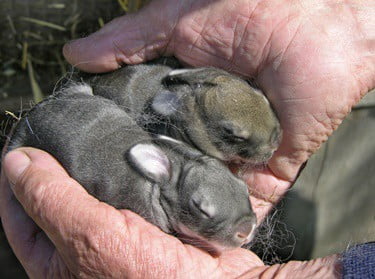
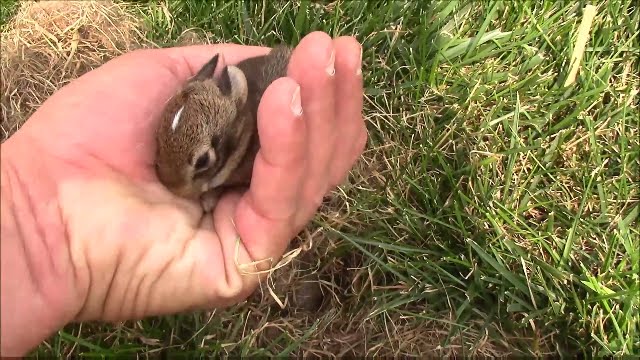
Can u raise a wild baby bunny. Baby wild rabbits are like domestic rabbits - they will not bite you and are safe to raise. They are really jumpy though and will try to escape whenever they get a chance. Not many people have been successful in domesticating wild rabbits.
If you handle them daily they may become more familiar with people and settle down. The answer is probably not. You can generally raise an animal from a baby to not fear humans.
But domesticated animals including rabbits have been specially bred to reduce the factors that make wild animals dangerous. To keep a wild baby rabbit alive you must determine whether the mother is around. Mother rabbits only return to the nest twice a day to feed their kits.
If they are orphaned you will need to provide a nest maintain the right temperature and provide a healthy diet. It wouldnt be a great idea to take a wild rabbit even a baby s and put itthem into a cage. They would protest being held and this can be quite painful.
And the kids would shy away naturally because a wild rabbit is not easily handled. These would not be petting rabbits. If the mom was killed the best thing you can do for a wild orphaned baby bunny is to get in touch with a skilled rehabilitator.
In the meantime call your local humane society or animal control and one of these vets for a wildlife referral. Rabbit Vets and Pet Bunny Vets. To care for a wild baby rabbit line a wooden or plastic box with pesticide-free soil and dried hay then scoop out a circular nest in the hay and nestle the bunny into it.
Remember to handle the baby as little as possible since excessive handling can cause distress and even death. You can take care of a wild baby rabbit at your home. Pick the wild baby rabbit and place it at a comfortable location feed the baby rabbit let him rest for 2-3 days and then bring him out of the cage.
Mother rabbits have no issue in accepting wild baby rabbits even from humans. Younger bunnies are much easier to win over. Also you will have to keep a wild rabbit separated from your domesticated bunnies.
Not only because there is a risk of them passing along a disease but also because they can never breed. You also need to consider it from a legal perspective. If you happen to disturb a rabbit nest go ahead and put the babies back assuming they are uninjured.
After placing them back in the nest find two small twigs or sticks and cross those over the opening to the nest like the letter X. This will be your clue as to whether or not the mother has come back to feed the babies. Babies can easily get cold so please turn off any fans or air conditioners and close any windows during feeding time.
Right after feeding you can gently hold the baby close to your chest to warm it. Prepare the Formula or Use Kaytee Exact Baby Bird Formula The measurements for the formula are approximate so you can adjust it. The best chance for survival of a wild baby rabbit is to leave it in its nest where the mother will return to take care of it.
If you find a wild baby rabbit let him be and do not attempt to rescue him. Mother cottontails feed their babies only once or twice a day and then stay as far away from the nest as possible so as to avoid attracting predators. I wouldnt think keeping wild rabbits in cages would be very fair to them and you are making a lot of addition work for yourself.
As suggested simply process the meat immediately for storage. Rabbit can be very very tough if not cooked properly. Properly in this case means over a low heat for 3 hours.
Domesticated rabbits will not survive in the wild and should never be set free. Wild rabbits should never be tamed and confined as it causes severe stress. Wild and domesticated rabbits share some similarities.
This means theyll find enough common ground to co-exist. The best thing you can do for wild babies is to leave them alone restored to the nest or if injured get them to a rabbit vet or wildlife rehabilitator. Baby rabbits are very cute and it is natural to want to handle them.
However they are very easily stressed by handling and noise. Any undue stress can cause them to have heart failure. They are wild animals.
Individuals raising orphaned babies must not treat them as pets. There is a 90 mortality rate with orphaned baby rabbits in human care. You can prevent harm to baby rabbits by checking your yard carefully for rabbit nests before you mow.
Do this especially if youve let the grass get taller than usual. Outdoor cats and dogs are a major threat to bunnies. If your pet gets hold of a bunny a licensed wildlife rehabilitator or veterinarian should see the bunny immediately.
A rabbit in the wild may cover hundreds of feet on any given day so having room to roam safely is crucial for your pets. If you dont have room for a run indoors you can put a run in your yard. The run should be spacious but it should be secure in case the rabbit or rabbits try to escape.
Always keep the run in the shade and supply water. Unfortunately nests that appear abandoned are often not and wild baby rabbits removed from their nests by humans are unlikely to survive without the care of a vet or skilled wildlife rehabilitator. In many states it is illegal to care for wild rabbits unless you are a licensed rehabilitator.
Previous post
Can u raise a wild bunnyNext post
Can two male bunnies get along